QPS discipline data “an indicator for where we’re at”
Published 10:10 am Wednesday, June 17, 2026
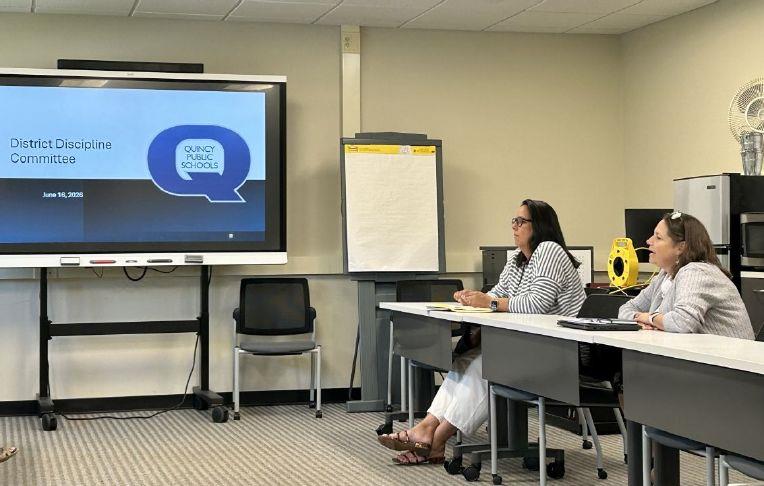
QUINCY — Data reviewed by a Quincy Public Schools committee leads to larger discussion of student discipline.
The Discipline Committee on Tuesday reviewed 2025-26 discipline data, school improvement plan goals, student handbook updates and a student discipline staff survey report.
“The numbers can help be an indicator for where we’re at and where we’re trending,” said School Board member Tim Davis, the committee co-chair. “If we’re heading in the wrong direction, we need to identify what needs to happen to address those issues and get back into our glide path.”
Out of school suspension days, for example, totaled 2,866 for students in grades 6-12 — averaging 6.6 days per student involved and 2.6 days per occurrence.
“That’s a huge number,” Quincy Junior High Principal Brenda Fleer said.
More concerning, though, is a metric monitoring student behavior for pre-kindergarten through fifth-grade students and 6-12 students. The metric — available through a multi-tiered system of support dashboard, known as Panorama, to help focus on the whole child — identifies students as on track with behavior incidents on 2% or less of school days attended, at risk with behavior incidents on 3 to 4% of school days attended and critical with incidents on 5% or more days.
Ideally, the district would have 80% of students on track, 10 to 15% at risk and 5% critical. Last year, for grades 6-12, the percentages were 75, 11 and 16 compared to 77, 10 and 13 the year before. For pre-K-5, the percentages were 79, 8 and 12 last year compared to 83, 8 and 9 the year before.
In the younger grades, “we’ve taken a little bit of a drop. We stayed pretty consistent last year, but what we’ve seen, and it’s not uncommon, is Tier 3 is higher than Tier 2,” QPS Director of Teaching and Learning Kim Dinkheller said.
That can happen when student behavior escalates before interventions can be put in place or because Tier 2 interventions aren’t as strong as needed.
“It’s probably a combination of both,” Dinkheller said. “We recognize some Tier 2 interventions need to strengthen a little bit, but we do have kids escalating or entering our district from another district already at Tier 3.”
Staff members use the data to help stop students from advancing from at risk to critical levels.
“Those conversations and questions are being asked at the building level every day. This is a way to get that 10,000-foot view and make sure the district as a whole is asking the right questions,” Quincy High School Principal Jody Steinke said.
Looking at the data helps the district decide “whether or not our systems are working the way we think they are working and if there need to be any changes,” said School Board member Rachael Petty, who chairs the committee. “Those changes might not be huge, like looking at Tier 2 and what we need to improve so we don’t have so many people jump to Tier 1.”
Staff confidence with managing student behaviors in the classroom and in non-classroom areas also factors into the district’s discipline numbers.
“As we lose experienced teachers and get our newer teachers in, you’re going to have more challenges in classroom management and may have higher discipline issues,” Davis said. “That highlights the importance of the teacher retention issues we’re having and some of the things we want to do to help maintain and keep our experienced teachers here so we can have better improvement in classroom management.”