City settles with former employee after complaints raised in clerk’s office
Published 6:00 am Wednesday, July 22, 2026
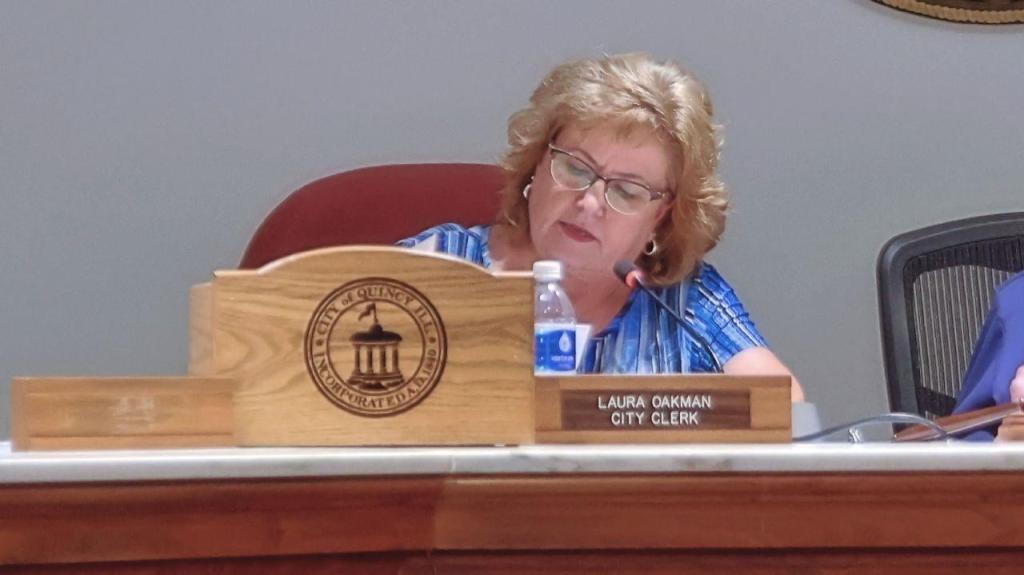



QUINCY — After concerns were raised by a former employee, Quincy officials settled a federal employment complaint before eliminating the city’s deputy clerk position.
At the end of May, the Quincy City Council approved a change in the city’s newly passed budget for the 2026-27 fiscal year that removed the position of deputy clerk from the city’s payroll.
The position of deputy clerk has long been a staple of the day-to-day operations of city business. Before being appointed to take over as clerk following Jenny Hayden’s retirement, Laura Oakman served as deputy clerk for almost 20 years.
According to Quincy Mayor Linda Moore, the work of the deputy has been spread out to other employees throughout the administration.
“The duties of the deputy clerk position have been reassigned to existing employees,” Moore said. “After reviewing the operational needs, the city determined it was in its best interest to redistribute responsibilities among other departments, rather than maintain a full-time deputy clerk position.”
Since being first appointed in 2021 and then elected to the position in 2025, Oakman has had four separate deputies working under her in the clerk’s office. All four deputies in that five-year period have left the position for either a different position at City Hall or left city employment altogether.
The Herald-Whig filed a Freedom of Information Act (FOIA) request to determine if there was a pattern of concern with the deputy clerk postholders, but only one complaint occurrence was returned, filed by one of Oakman’s former deputy clerks, Mercedes Platt.
Requests for information under FOIA were also filed with the U.S. Equal Employment Opportunity Commission’s (EEOC) Chicago District Office, but no information was provided. The district office claimed that the complaint filed falls under exemptions provided under the Freedom of Information Act as a potential invasion of personal privacy.
In the information released by the city, Platt had submitted a federal Equal Employment Opportunity complaint as well as a parallel complaint with the Illinois Department of Human Rights (IDHR) against the City of Quincy stemming from her time as deputy to Oakman.
The complaints were filed under provisions of law that prohibits sexual harassment, creation of a hostile work environment, violations of the Americans with Disabilities Act (ADA), retaliation, among other violations.
Oakman declined to provide comment to the Herald-Whig regarding the settlement or the allegations. Other than the response to the FOIA request, the city’s administration only noted that Oakman, as an elected official, has the right to speak on her own behalf if she chooses.
Platt did speak with the Herald-Whig to share her story, but after speaking to her attorney, she had concerns that her comments could leave her open to legal repercussions under the settlement agreement. She asked that the Herald-Whig not publish her direct comments.
According to the documents provided under the FOIA request, complaints under EEOC and IDHR laws were filed in July 2024. Discussions on the complaint between attorneys for the city and Platt continued into 2025.
The complaints reference violations of the law that include sexually adverse actions, a hostile work environment, adverse actions under the Americans with Disabilities Act, and failure to accommodate, among other allegations under both the Family and Medical Leave Act and the Civil Rights Act.
These complaints to the city were originally filed while Mayor Michael Troup was in office. With Oakman being an elected official, options for discipline were limited, as is the case at most government levels.
In July 2025, the city’s administration under Moore agreed to a settlement with Platt to avoid litigation. The city paid $20,000 as part of the settlement, with $13,000 going to Platt and $7,000 to her attorney for fees.
Under the settlement, the city also agreed that all city employees would be provided training consistent with the ADA and the Civil Rights Act. All management and nonmanagement employees were given refresher courses on both the rights and the responsibilities under the two acts.
No other records of complaints against Oakman were provided under the FOIA request, so it’s uncertain if the three other clerks who served as deputy were treated in a similar fashion.
Platt’s hesitation to speak on the record appears to have a foundation in Section 5 of the settlement agreement, which prohibits any involved party from making disparaging comments in relation to other parties.
Even though the next section of the agreement affirms Platt’s continued protection under the free speech provisions of the First Amendment, concerns over potential legal reprisals led to Platt choosing not to provide comments for this story.
One of the issues that could arise in the elimination of the deputy clerk position is the loss of institutional knowledge that comes with the position. The baton for the city clerk position is often passed to a deputy, as it was for Oakman, who learned the job while working for the clerk.
With the elimination of the deputy position, the next clerk to be appointed or elected will have to be trained by the outgoing clerk on the city’s specific operations, or learn on the job, even if they have previous experience elsewhere.
Other than the comments from the mayor on the redistribution of deputy clerk duties, the administration did not say if the decision had anything to do with what appears to be a pattern of behavior from those who have worked for Oakman.
Following Oakman’s election in 2025, the city clerk position will next be on the ballot during the 2029 election.