Robotics meets virtual reality at JDUB Academy
Published 9:11 am Friday, June 12, 2026
QUINCY —
QUINCY — Michael Wilson sits in front of the computer, crafting a 3-D pizza that looks good enough to eat.
Not far away, Evan Baker and Joshua Brown build solar-powered robots.
In the Tech Quest class, part of this year’s JDUB Academy offered by John Wood Community College, robotics meets virtual reality as students have fun with high-tech learning.
“It’s pretty cool,” Evan said.
“I did this last year and thought it was really fun,” Joshua said. “I really like VR (virtual reality) and pretty much everything in here.”
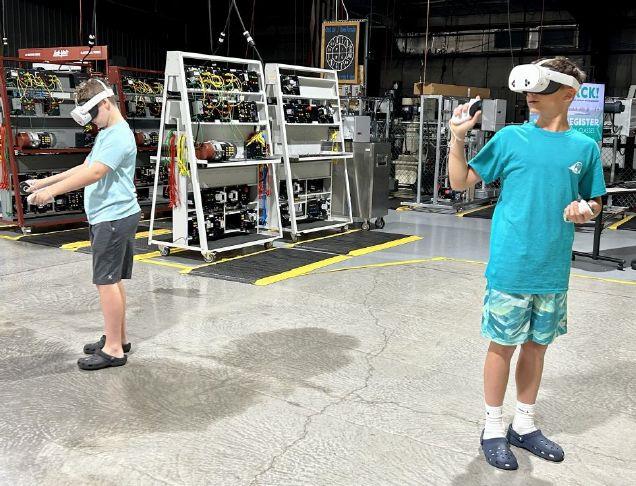
Across the hall, Jacob Beaver sports an Oculus Virtual headset to play Gorilla tag, while Teo Mamdani and Sawyer Douglas play a football game together in VR headsets.
“For some of them, this may be their very first time using a VR headset,” instructor Gavin Ideus said. “They spend the first day learning how to use them, teaching each other how to get into the game. Once they get past that, they can connect the VR headsets together. They’re doing something together in a virtual world.”
VR likely will be a key to the future for the students in grades four through eight even though “probably none of them really know what they want to do,” Ideus said. “At least this way we’re giving them some exposure.”
JDUB classes offer K-12 students classes ranging from art and coding to cooking, dance and theater at the college’s main campus and Workforce Development Center in Quincy and the Ag Center near Perry. The 42nd year of summer learning has 346 students enrolled over three weeks.
Ideus offers three sessions of Tech Quest with students building and testing robots, then troubleshooting any issues.
“One student took it apart three times to get it to work,” Ideus said.
Both ZSpace and the headsets gave students opportunities to work with virtual reality. The laptops “don’t require any special glasses or good vision. You just sit right there, and everything is 3-D and just comes out of the screen,” Ideus said as he demonstrated programs involving building a robotic arm and exploring the human heart.
The headsets took students to a virtual garage where they worked with hand and power tools, then had a chance to explore a selection of games.
“They may have never used them, but they can learn quickly. They adapt,” Ideus said. “What’s neat is within a year the whole platform has been updated. I have to adapt to it along with the students. Some of the students taught me.”
The week-long class introduced Michael to the VR tools, and the sixth-grader plans to keep using them.
“It’s fun, really fun,” he said, while adding a piece of pepperoni to his virtual pizza. “The headsets were really fun. I liked them. It’s basically this except you use controllers, not a pen.”