Prep sports dealing with severe official shortage
Published 6:00 am Wednesday, September 7, 2022
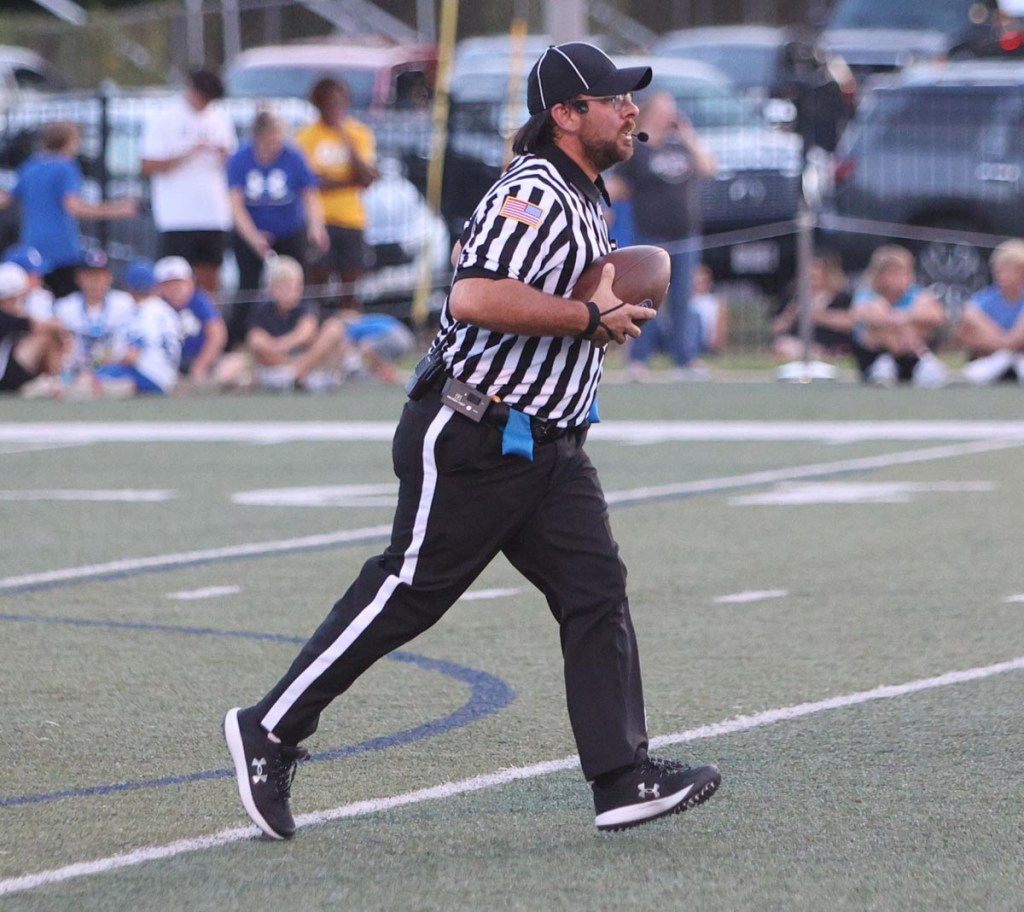
Friday night lights have been a tradition like none other for decades.
But this fall’s high school football schedule looks a little different.
Quincy Notre Dame will play three Saturday games.
Three other area teams, Pittsfield, Unity-Payson and Brown County, will play at least one non-Friday game.
The reason? A shortage of high school sports officials.
While the sport of football has seen a decline in officials, a 27.4% decrease in Illinois and a 16% reduction in Missouri in the last 10 years, the shortage has impacted sports across the board.
Over the last decade, the Illinois High School Association has lost 6,378 officials, a 29.3% decrease. Meanwhile, the Missouri State High School Activities Association lost 1,183, a 14.2% decrease.
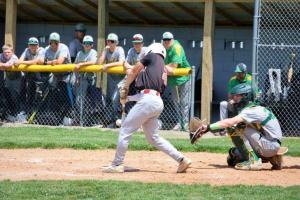
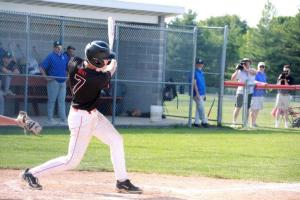
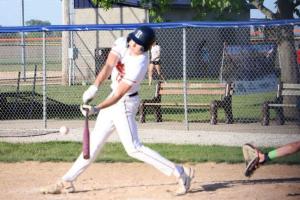
Baseball has been the hardest-hit sport in Illinois with a 41.9% decrease over the past decade. In Missouri, basketball has taken the largest toll with a 20.6% decline in officials.
Another hard hit sport in Illinois is wrestling with a 30.6% drop since the 2011-12 school year. Missouri, however, has had an increase in wrestling officials, adding 42 over the last decade.
Why is this happening?
One reason why officials are leaving the profession is age.
“I’m 41, and I would say out of those 39 softball umpires (in my area), there might be five of them younger than me,” said Lucas Brass, a baseball and softball assignor in Missouri. “We have struggled to see the younger generation being interested in umpiring.
“There’s been a hole for a long time and it’s just not getting filled.”
While Illinois and Missouri were already seeing a steady decline in years prior to Covid-19, the pandemic pushed a number of older officials into retirement.
Between the 2019-20 and 2020-21 academic years, the MSHSAA lost 767 officials, the largest decline in a one-year span in the last decade. In 2021-22, the organization added 20 officials from the previous year.
The IHSA also had trouble retaining older officials, according to Associate Executive Director Kurt Gibson.
“When the pandemic hit, we saw a number of folks stepping aside,” Gibson said. “The official in Illinois is generally going to be on the older side. I think we’ve just had some natural attrition from an age standpoint.”
Another cause behind the shortage is lack of compensation.
The pay, set by the individual schools, has been seen as inadequate by some officials. Potential officials also have to pay for official licenses each year, uniforms and official clinics.
If an official wants to work in multiple states, they must have a separate license and uniform and attend a clinic in that state. Officials in both states are required to pass an official exam.
In Illinois and Missouri, officials must renew their licenses every year. In Illinois, license renewals cost $70 for the first sport, $20 for the second sport and $15 for each additional sport.
License renewals in Missouri cost $65 for the first sport, $30 for the second sport and $25 for each sport thereafter.
Schools around the area are taking note of the lack of compensation. A number of schools are increasing official pay, including Quincy High.
QHS athletic director Matt McClelland said Western Big 6 schools increased their pay for officials from $140 to $200 to officiate both a freshman and varsity football game.
A number of Missouri high schools have also upped their pay along with compensating for gas mileage. Football official Mark Brassfield says schools in Missouri tend to pay a bit more than their Illinois counterparts, which he says can drive an official’s decisions.
“If schools want officials, they’re going to have to realize the pay has to come up, whether they like it or not,” Brassfield said. “There has been an increase in pay but right now, we’re still way behind in Illinois, and I know a lot of schools are coming up quite a bit to be comparative to the Missouri side.”
Verbal abuse from fans, coaches and players has also been a motivation for officials to step away.
While heckling from those around the game is not a new phenomenon, Kenny Seifert, an assistant executive director at the MSHSAA, says there has been a slight uptick in poor sportsmanship.
“Unfortunately, we live in a world where fans are comfortable taking it to the next level, and that taking it to the next level is so over the top and unacceptable,” Seifert said. “It is having a tremendous negative effect on our ability to attract new officials.
“Have we seen a tremendous amount (of poor sportsmanship?) No, we have not.”
“They are isolated incidents, but those incidents get a lot of attention. That attention and exposure is what those interested in becoming an official are seeing. And when they see that, it forces them to take a little bit of a backseat and re-evaluate whether that’s something they want to do or not.”
How has this impacted schools?
“It’s definitely getting more difficult to find officials for certain sports, even for football season,” Hannibal High athletic director Clint Graham said.
While the Pirates will play all nine of their varsity football regular season games on Fridays, scheduling officials for volleyball, soccer and other sports has been challenging.
The Mark Twain Association, an officials’ association Hannibal uses for officials, has only 16 baseball umpires for the 12 schools it serves, according to Brass.
Some schools are also branching out to other areas to get officials to officiate their games. Bill Connell, athletic director at Quincy Notre Dame, says the Quincy area is down to two football crews and less than 10 soccer officials.
For soccer, QND sometimes brings in officials from St. Louis, Springfield and the Quad Cities. Notre Dame brought in a crew that included officials from Jacksonville and Springfield for its football game against Quincy High on Aug. 26.
The official shortage has also hurt junior varsity and freshman games. Hannibal, Quincy and other schools in the area have had to cancel some lower-level games due to a lack of officials.
“It’s frustrating because the players, they’re working hard to practice and we’re trying to get them as many contests as we can. (It’s tough) to tell them that we can’t get a game scheduled or made up because of a lack of officials,” Graham said.
“It’s frustrating, not only from my perspective as an AD, but for fans, for parents, for the kids, players, it’s frustrating all around.”
And according to McClelland, this issue could reach higher levels.
“It probably won’t be long until we start losing varsity games to the same thing,” McClelland said. “We do have a pretty bad situation on our hands.”
However, some schools across the area have been fortunate to see limited changes due to the official shortage.
Illini West athletic director Grant Surprenant says the Chargers have officials assigned for all their football and volleyball games. Greg Altmix, the boys’ basketball coach at Liberty High, says the Eagles have been able to keep three officials at their games.
But Altmix said his school may be looking at games with just two officials in the near future.
Southeastern athletic director Cyle Rigg said his school has not had to cancel any games due to a lack of officials. The Suns have had to play games with just one official or one official and a non-certified official.
How has this impacted officials?
“It’s hard to cover the games that are scheduled,” Brassfield said. “Even meeting the required number of officials that are supposed to be on the field, sometimes with JV, there’s only three guys. It definitely makes it tough on all of us.”
Since a chunk of officials left the profession after the 2020-21 school year, remaining officials like Brassfield have had to pick up the slack.
Rick Genenbacher, an Illinois basketball official, worked 89 games last year, a sizable increase from his typical 60-75 games a year.
This shortage has also left officials with smaller crews, which can make tough calls even tougher.
Brassfield has typically worked with three other officials during football games in his 15 years as an official. Recently, however, the 49-year-old has had to work with just two others in some games.
“We have a manual that says, ‘this is four-man mechanics, five-man mechanics,’ what everybody is supposed to do, but now, you have to make up your own,” Brassfield said. “Now, you only have three officials trying to watch 22 players all the time. Obviously, it makes it more difficult.”
What is being done to resolve this issue?
Many parties from top to bottom are looking for ways to deal with the shortage head-on. At the top, the IHSA and MSHSAA are adopting initiatives to recruit new officials.
In Missouri, the MSHSAA started a program called “Trade your Stripes” where any active duty military member or veteran can receive their first-year registration for free.
The MSHSAA also has a high school graduate program that allows every athletic director in the state to select a male and female graduate for a free first-year registration.
The IHSA offers a class called “Officiating 101” where potential officials can learn what goes into being an official, including licensing, finding games, buying equipment and more.
The IHSA is also looking to remind its schools to support officials and create sportsmanlike environments on the field and court.
“Competition is great, it can be intense, there’s absolutely nothing wrong with that,” Gibson said. “But there are some behaviors that we see both on the coach-player level and the fan level that we’ve got to do a little better job of addressing because we know it’s one of the reasons officials are being driven out of this.”
Local coaches, including Altmix, are taking note of how officials are being treated.
“Treating officials with respect should be a given from my players, that’s just what I expect,” the Liberty High coach said. “I’ll be the first to admit 30 years ago, when I first got into (coaching), I definitely got onto officials more than I should have.
“You learn as you get older, that everybody’s out there doing the best they can. Everybody has a role and the official’s role is an important one.”
Graham is also pushing his coaches at Hannibal to create sportsmanlike environments.
“We want Hannibal to be a place (officials) would want to come to officiate,” Graham said. “If they have the choice to go to another school or Hannibal, we want them to pick Hannibal because of the way we treat officials and our workers.”
Palmyra High is also looking to be a place officials would want to officiate at. PHS athletic director Brian Wosman said his school escorts its officials to and from the locker room, and offers them food between and after games.
Wosman said Palmyra also tries to raise pay for its officials “every couple of years” to remain competitive with surrounding schools.
Pittsfield has also taken note of official pay and will increase its pay to $120 for each varsity football game next season, according to Saukee coach Zach Ferguson.
In an effort to recruit officials, Quincy Notre Dame hosted an IHSA clinic last May where an official from every sport came to help answer questions. As a result, “three or four” attendees went through the process to become an official, according to Connell.
Will this situation get better?
“I sure like to think it will but man, it’s a tough go,” said Bob Baucom, a local basketball official. “I wish somebody would come up with a system to get more (officials) because it’s going to get worse before it gets better, and I don’t know if it’ll ever get better.”
In his 49 years of officiating, Baucom says he has never seen an official shortage this bad before. Brassfield and Genenbacher are also uncertain of the future. However, Gibson and Seifert remain optimistic the tide will begin to turn soon.
“I think the pandemic has driven a number of others out for a variety of reasons and I think now, it would appear we’re starting to turn the corner on the pandemic, beginning to re-engage like we once did,” Gibson said.
“I think these numbers are going to begin to grow over the next three to five years. I say that mostly because I truly believe that our officials associations around the state are doing a tremendous job in really recruiting and looking for possible officials in their area.”
As for now, despite the difficulties that come along with being an official, Brassfield, Genenbacher and Baucom still find it fulfilling.
For Brassfield, a QHS and Quincy University football alum, it’s the love of the game.
“I decided to officiate to give back to the sport that was kind to me and gave me a place to go and have fun and be a part of a team,” Brassfield said.
For Genenbacher, it’s the people.
“I love being around the kids, I love being around the coaches, I love being around most of the fans,” Genenbacher said. “When you see them out, they thank you, they appreciate what you do a lot of the time. Some people don’t get it, but a lot of the people do and that’s what makes it enjoyable.”
And for Baucom, it’s the urge.
“I’m looking forward to getting started again,” Baucom said prior to the start of the school year. “Everybody says, ‘How many years?’ Well, I’ve still got that itch. It’s still fun to pack your bag and walk out there.”