Sentencing in September shooting case delayed one week
Published 8:23 am Thursday, July 2, 2026
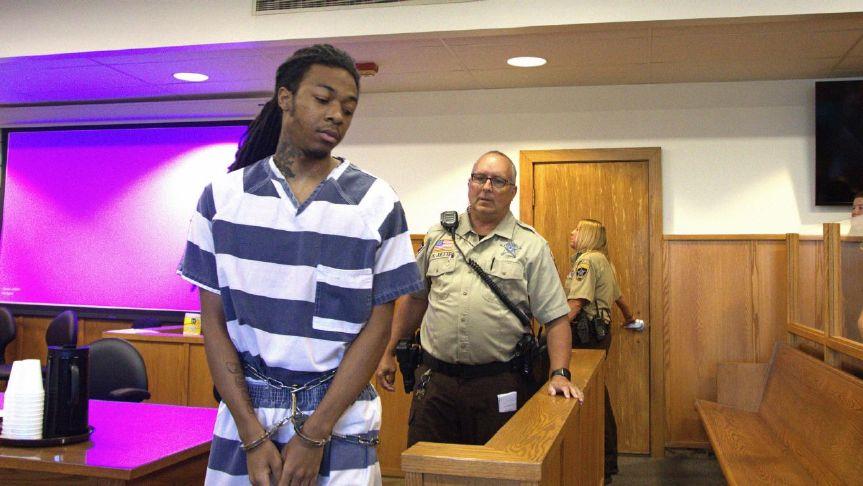
QUINCY — A Quincy man will have to wait at least one more week to find out his fate after he was convicted in a 2025 shooting case.
Dyrece T. Knaff II, 21, was in court Wednesday for what was supposed to be a sentencing hearing following his conviction in May on two Class X felonies of aggravated discharge of a firearm and two counts of aggravated discharge of a firearm at another person, Class 1 felonies.
By law in Illinois, the guilty verdicts on the two Class X felonies carry mandatory prison sentences, with a minimum of six years and a maximum of 30 years on each count. Judges have some discretion in ordering the sentences to run together, or concurrently, or they can order them to be served consecutively, meaning Knaff could face as much as 60 years in prison on the two more serious charges.
The September shooting sent both Jeremy Woodson and Na’Dae’Sha Lewis to the hospital with multiple gunshot wounds. At the trial in May, prosecutors presented evidence over the course of three days to show that Knaff fired into a crowd of people before fleeing to Keokuk, Iowa, where he was arrested on Oct. 1.
At the trial, witnesses took the stand to describe what most referred to as a chaotic night in which 10 to 15 people were gathered with the intention of fighting. The Adams County State’s Attorney’s Office entered a video of the fight into evidence, showing two men grappling and rolling around on the ground. The video doesn’t show any actual punches being thrown.
After sending several notes to Burch indicating they could end in a deadlock, the jury returned guilty verdicts on all four counts after nearly five hours of deliberations. Following the verdict, Judge Charles Burch set the case for sentencing on July 1.
At Wednesday’s hearing, defense attorney Andrew Schnack told Burch that the Adams County Probation Department, which handles presentence investigation, or PSI, reports for the county, hadn’t included copies of letters written on Knaff’s behalf to serve as character references as part of the report.
Schnack said that, as a defense attorney, he has always tried to be hands-off in this part of the process to avoid putting his own words into someone else’s statements, so he didn’t realize the defendant was responsible for supplying those references for the PSI report.
One person with knowledge of the process, speaking on background, said the policy of the probation department has come up in the past because defendants and their attorneys are usually eager to submit material that could mitigate stronger sentences.
After a brief recess that allowed both the defense and the Adams County State’s Attorney’s Office to review the issue, Burch granted a continuance of the sentencing for one week, until July 9, to allow Schnack to submit the letters to the probation department to supplement the PSI.
Following procedural delays ahead of the trial, Knaff had been released on home confinement in April under Illinois’ speedy trial law. Following his convictions, with prison time being mandatory, Knaff was returned to the custody of the Adams County Jail. Once sentencing is completed, Knaff will receive credit for the time he has spent in custody.